Satellite proliferation imperils astronomical observations, study finds
Satellite proliferation imperils astronomical observations, study finds <br>
As thousands more satellites enter orbit, astronomers may face mounting difficulties in observing the cosmos, according to a study by the European Southern Observatory, which operates telescopes in northern Chile.
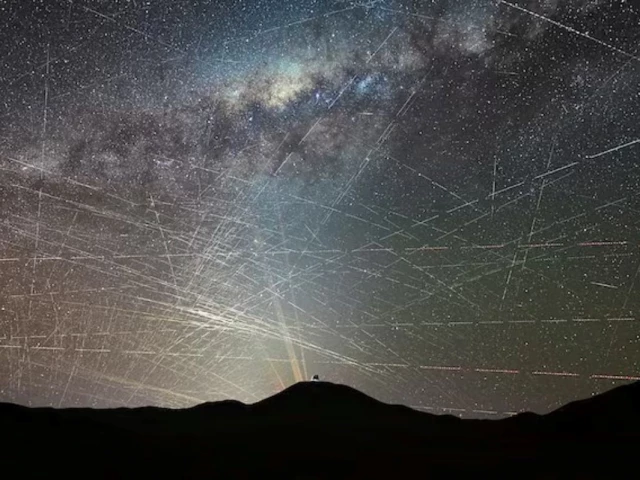
The ESO study found that ‌existing proposals to launch more than 1.7 million satellites into orbit, including some very bright ones, would substantially degrade astronomical observations. There currently are roughly 15,000 satellites in orbit.
Bright streaks of light left by satellites can interfere with observatories and the quality of night-sky photography.
"Each of these satellites, when it crosses a telescope's field of view, leaves a bright line," said ESO astronomer Olivier Hainaut, author of the study published in the journal Astronomy & Astrophysics, opens new tab.
A single streak of light may be a minor nuisance, but when the numbers multiply there can be major problems. Each streak wipes away a small part of a telescope's view of space, Hainaut said.
The global satellite industry has grown dramatically since 2019, driven by internet services such as Elon Musk's SpaceX Starlink and Amazon's Leo.
The study's findings were based on simulations carried ‌out at the Paranal Observatory in Chile's Atacama Desert. One model examined a constellation of up to a million satellites, with thousands of illuminated objects visible above the ESO's Very Large Telescope in the Atacama shortly after sunset.
Hainaut said the impact would depend on both the number and the brightness of the satellites in orbit.
"If there are 100,000, that is a level of pain that is bearable," Hainaut said.
If there are 300,000, some telescopes could be deprived of most of their data, Hainaut added.
Despite the concerns, researchers said the benefits of satellite internet services should not be minimized, and that the challenge lies in balancing technological advances with scientific discovery.
"The problem is that this kind of research takes time, but the satellites are already being launched," Hainaut added.
<br> <img src="https://tribune.com.pk/story/2624969/satellite-proliferation-imperils-astronomical-observations-study-finds" alt=" Satellite proliferation imperils astronomical observations, study finds" width="100%">


Comments
Post a Comment